
It’s time to talk about:
Cannabis
Did You Know?
Smoking is the most common way that people use cannabis, and one of the most harmful.
Smoking cannabis, no matter how it’s done, exposes the lungs to harmful toxins and carcinogens, similar to those found in tobacco smoke. These substances can cause lung irritation, chronic bronchitis, and may increase the risk of respiratory infections or more serious health issues over time.
For those who use cannabis, exploring less harmful methods of consumption—such as edibles or oils — can significantly reduce risks to lung health.
Did You Know! (Based on 2024 Canadian Cannabis Statistics)
- most people are not using daily
- more than half use 3 days/month or less
- most users do not drive after using
- The average person spent $63 per month on cannabis in 2024
Cannabis: Know the Risks
Smoking
- Toxic Smoke: Smoke from burning cannabis contains harmful substances similar to those found in tobacco smoke.³⁴
- Deep Inhalation: Cannabis smokers tend to breathe in deeply and hold their breath longer than cigarette smokers, leading to increased tar exposure.³⁴
- Respiratory Issues: People who smoke cannabis frequently, without mixing it with tobacco, often have more visits to healthcare providers for respiratory problems compared to non-smokers.³⁰
Vaping
- Weakened Immune System: Vaping cannabis can make the immune system weaker and increase the risk of lung infections.³⁴
- Perceived Safety: Some people believe vaping is safer for the lungs than smoking, which might lead to more frequent use or starting cannabis use earlier, increasing the risk of problematic use or addiction.³³, ⁴²
Edibles
- Accidental Ingestion: There is a risk of children accidentally eating cannabis edibles, which can be dangerous.³
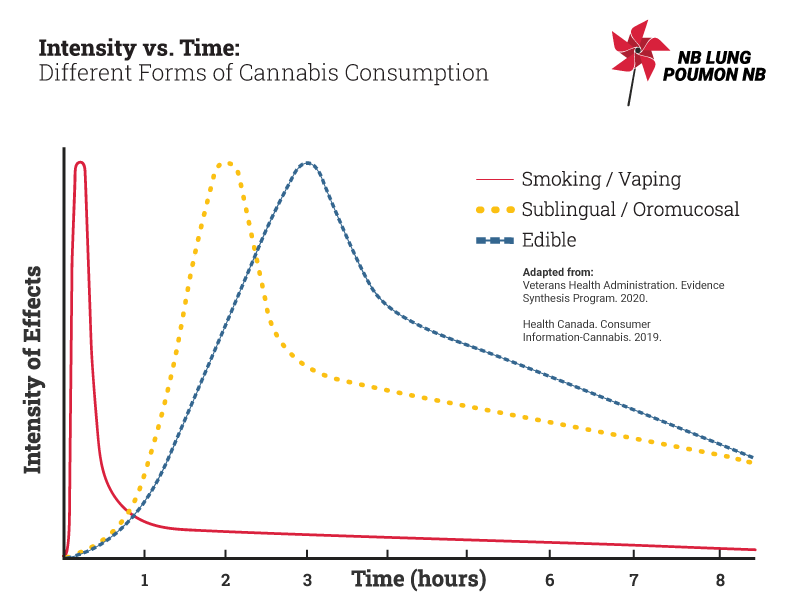
- More intense effects: Longer and more intense psychoactive effects (THC)⁷, ⁸, ¹⁰, ¹³
- Delayed onset: Edibles take a while to kick in, which can make people eat too much before they feel anything.⁷, ⁸, ¹⁰, ¹³
Oils
- Drug Interactions: Since both THC and CBD are processed by the liver, there’s a chance they could interact with other medications, affecting how they work in the body.¹⁵
- Hard to dose: Oils can be hard to dose (volume and potency vary a lot).
Protect Your Lungs
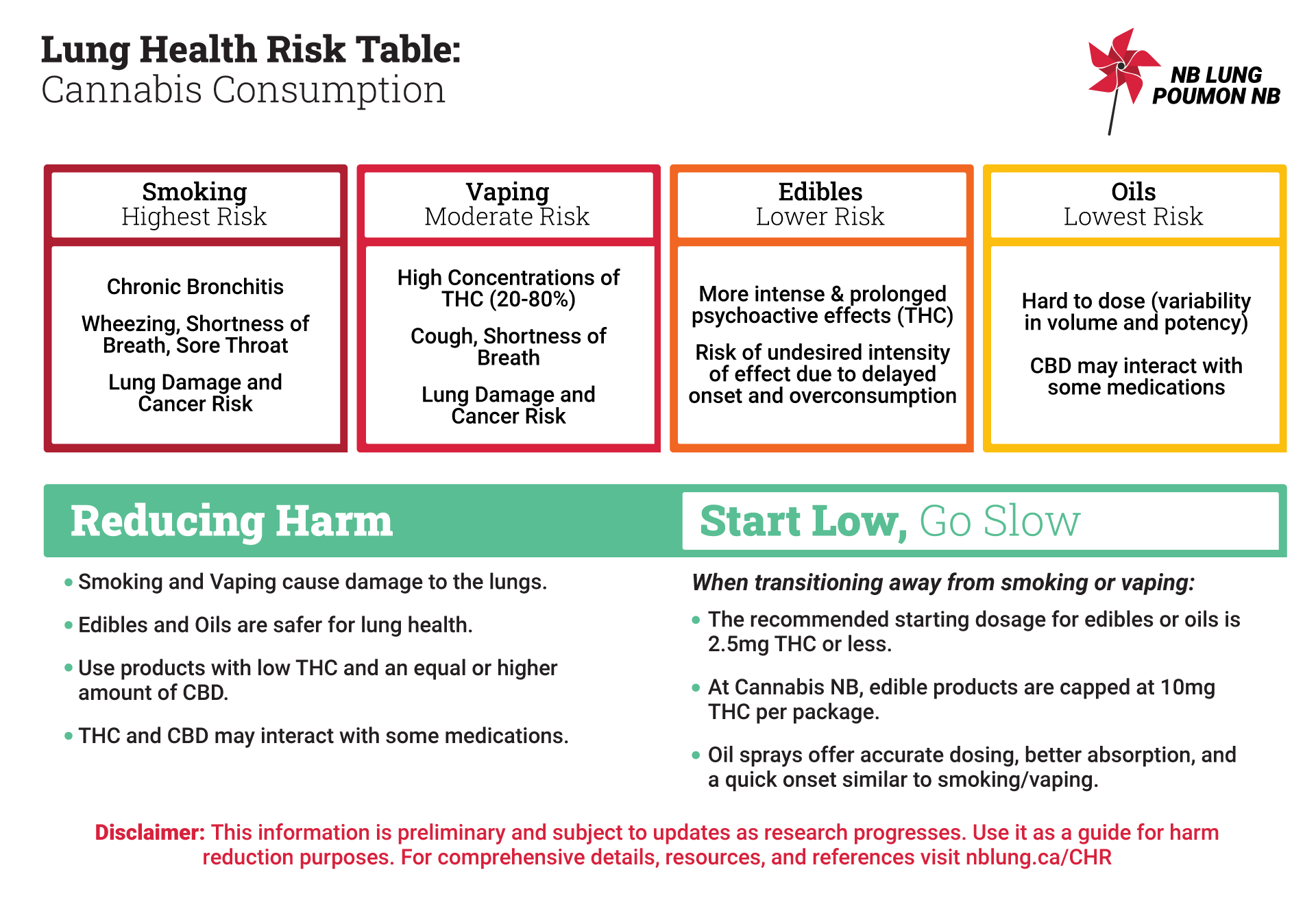
This table shows how different cannabis products affect lung health, from higher risk to lower risk. It highlights that smoking and vaping are hardest on the lungs.
Transitioning Away From Smoking: Edibles and Oils
- Switching to edibles and oils can be better for your lungs.²³
- Choose Low THC and Higher CBD: Products with low THC and an equal or higher amount of CBD are recommended.¹²
- Benefits of CBD: CBD can reduce the side effects of THC, especially useful during the day or when driving.¹²
- Medication Interactions: THC and CBD can interact with some medications.¹² ¹⁵
- Medical vs. Recreational Use: Medical cannabis patients often use products with more CBD and less THC to improve symptoms, function, and quality of life, with fewer side effects.¹²
Start Low, Go Slow
When starting with cannabis, it’s best to “start low, go slow, and stay low.”
- Smoking/vaping: 1–2 puffs of 10% THC or less, then wait 15 minutes to feel effects. Add 1 puff every 15–30 minutes if needed. ¹² ³²
- Consider safer alternatives like edibles and oils for lung health, and be aware of how cannabis might interact with other medications.
- Edibles: Start with 2.5 mg of THC or less.¹² ³²
- Choose Low THC and Higher CBD: Products with low THC and equal or higher CBD are recommended.¹²
- Sublingual Sprays: These offer precise dosing, better absorption, and a quick effect similar to smoking or vaping.⁸ ¹²
- Be Aware of Drug Interactions: Learn how cannabis may interact with other medications you are taking. Learn about drug interactions and cannabis.
Cannabis in your Life
Cannabis can affect different parts of daily life. Here are some common risks and practical ways to reduce harm.
Physical Health
LUNGS
Lower-risk tip: Avoid deep inhaling or holding your breath to reduce lung exposure and consider non-smoking options
HEART HEALTH
Lower-risk tip: Avoiding or reducing smoked cannabis products can help reduce harm.
Mind
MENTAL HEALTH
Lower-risk tip: Choose lower-THC or balanced THC:CBD products and avoid frequent use.
SLEEP
Lower-risk tip: Avoid making it a nightly habit, choose lower-THC products, and build a bedtime routine that does not rely on cannabis.
Mind
Long Term Risks
WORK + SCHOOL
Frequent cannabis use, especially high-THC products, can affect memory, learning, and attention in the long-term. ⁶⁶, ⁶⁷, ⁶⁸, ⁶⁹, ⁷¹, ⁷², ⁷³, ⁸³
Lower-risk tip: Avoid using before work or school, use less often, and choose lower-THC or balanced THC:CBD products.
MALE INFERTILITY
Cannabis use can lead to poor sperm quality, lower sperm count, and higher rates of erectile dysfunction. THC can interfere with important reproductive processes like sperm maturation. ⁴⁸, ⁶⁵, ⁵², ⁶⁰, ¹¹⁷, ¹²⁹, ¹³⁰
Lower-risk tip: Choose lower-THC products, use less often, and take breaks if you notice changes.
WOMEN'S REPRODUCTIVE HEALTH
Using cannabis during pregnancy can harm female reproductive systems and early childhood development. Due to limited research, it’s best to be cautious with cannabis use during pregnancy to avoid risks to the baby. ⁸, ⁸⁸, ⁹¹
Cannabis can affect hormones and reproduction, potentially disrupting menstrual cycles and ovulation. ⁸, ¹³¹
THC can remain in the body for up to 30 days after stopping use. ⁵⁰
Many pregnancies are unplanned, so women may unknowingly use cannabis early in pregnancy. ⁴⁵, ⁴⁸, ⁹⁴
THC crosses the placenta and can decrease fetal folic acid, essential for development, leading to risks like miscarriages and low birth weight. ⁵¹, ⁵⁸, ⁵⁵, ⁸⁷, ⁸⁹
Cannabis use during pregnancy can impair a child’s memory, learning, and other cognitive functions. ⁴⁶, ⁴⁷, ⁵⁶, ⁶⁴, ⁹⁴
Passive exposure to cannabis smoke can also affect pregnant women and their babies. ⁵⁴, ⁵⁷, ⁵⁸, ⁶²
THC can remain in breast milk for weeks and be more concentrated than in the mother’s blood. ⁴⁵, ⁵⁵, ⁵⁹, ⁶¹, ⁹⁴
Babies exposed to THC through breast milk may experience drowsiness, reduced muscle tone and poor feeding, impacting their nutrition. ⁵⁰, ⁹⁴
Lower-risk tip: If you are pregnant, planning a pregnancy, or breastfeeding, avoiding cannabis is safest. Or choose lower-THC products, use less often, and take breaks
Saftey
DRIVING
Cannabis can slow reaction time and affect focus, coordination, and judgment, making driving or operating equipment less safe. These effects can last from 6 to 24 hours, depending on the dose. Higher doses may cause effects to last longer. ¹⁰,¹¹,¹², ⁵⁶
Lower-risk tip: Plan a safe ride home and avoid driving or using heavy equipment for at least 6 hours, and longer if you still feel impaired.
MEDICATIONS
Cannabis can interact with some medications and change how they work. This may increase side effects or affect how well a medicine works. ⁵, ⁵⁶, ⁷⁰, ⁸³
Lower-risk tip: If you use cannabis for medical or non-medical reasons, talk to a health care provider or pharmacist.
Medications that may interact with cannabis include ¹³³ :
- ADHD medications
- allergy medications
- antibiotics and antifungal medications
- antidepressant or anti-anxiety medications
- anti-seizure medications
- blood thinners
- cold and flu medications
- heart medications
- HIV medications
- pain medications
- sleeping pills
Saftey
Product Choices
MIXING SUBSTANCES
Lower-risk tip: Stick to one substance, or use less if mixing.
SOURCE SAFETY
Unregulated cannabis may have unknown THC levels, contamination, or misleading labels.
Lower-risk tip: Buy from legal, regulated sources such as Cannabis NB.
PRODUCT SAFETY
High-THC products can increase the risk of anxiety, paranoia, and other unwanted effects. Synthetic cannabinoids like K2 or Spice can be especially dangerous. ¹²⁷, ¹²⁸
Lower-risk tip: Choose lower-THC or balanced THC: CBD products and avoid synthetic cannabis.
Want to learn more about Cannabis?



NB Lung has been helping New Brunswickers breathe easier since 1933.
Thank you for your support!
Page Last Updated: 28/02/2023